Manufacturing companies today operate in a high-pressure environment where customer expectations are rising, supply chains are volatile, and sales cycles are more complex than ever. Yet many manufacturers still rely on disconnected spreadsheets, emails, and legacy systems to manage customer relationships. This disconnect creates blind spots between sales, operations, and digital teams leading to missed opportunities, delayed production decisions, and frustrated customers.
The problem is not a lack of data. It’s the lack of connected, usable customer intelligence across the organization. When sales teams don’t see production constraints, or operations teams don’t understand upcoming demand, decisions become reactive instead of strategic. Over time, this hurts margins, customer trust, and long-term growth.
This is where a CRM for manufacturing becomes critical. Not as a sales tool alone, but as a central system that aligns people, processes, and data. In this guide, you’ll learn why manufacturing companies need CRM, how it supports operations and digital transformation teams, and how it becomes a foundation for smarter, more resilient manufacturing businesses.
Manufacturing companies need CRM to centralize customer data, align sales with operations, and improve visibility across the entire customer lifecycle. A CRM helps manufacturers manage complex sales cycles, integrate with ERP and production systems, improve forecasting accuracy, and enable better collaboration between sales, operations, and digital teams.
What CRM Means for Manufacturing Companies
In manufacturing, CRM is not just a system for tracking leads or sales calls. It is a shared operational layer that connects customer demand with internal execution. Unlike service-based industries, manufacturing businesses deal with long sales cycles, custom pricing, distributor networks, and production dependencies. A CRM in this context becomes the system that brings structure and visibility to all those moving parts.
For operations and digital teams, CRM acts as a single source of truth for customer interactions, orders, forecasts, and service history. When implemented correctly, it allows teams to see not only who the customer is, but how that customer impacts production planning, inventory decisions, and after-sales support. This shift changes CRM from a departmental tool into a cross-functional platform.
What makes manufacturing CRM different is its ability to integrate tightly with ERP, inventory, and supply chain systems. Sales conversations are no longer isolated from reality on the factory floor. Instead, customer commitments are informed by real production capacity, lead times, and fulfillment constraints—reducing risk and improving trust on both sides.
Why Manufacturing Companies Need CRM Today
Manufacturing companies are under pressure from multiple directions at once. Customers expect faster responses, accurate delivery timelines, and personalized service. At the same time, internal teams are juggling supply chain disruptions, fluctuating demand, and tighter margins. Without a connected system, these pressures amplify existing inefficiencies.
One of the biggest challenges is misalignment between sales and operations. Sales teams often commit to timelines or pricing without full visibility into production capacity or inventory levels. Operations teams, on the other hand, lack insight into future demand and pipeline health. This gap leads to rushed production, missed deadlines, and strained customer relationships.
Digital transformation has also raised the bar. Manufacturing leaders now expect real-time dashboards, predictive forecasting, and data-backed decisions. A CRM becomes essential because it turns fragmented customer data into actionable operational intelligence, allowing leadership teams to move from reactive firefighting to proactive planning.
Core Problems CRM Solves for Manufacturing Businesses
Manufacturers struggle most with disconnected systems and manual processes. Customer data lives in emails, spreadsheets, ERP systems, and individual inboxes. As a result, no team has a complete view of the customer journey.
Another major issue is forecasting accuracy. When pipeline data is unreliable or outdated, production planning becomes guesswork. This leads to overproduction, stockouts, or excess inventory each with direct financial consequences.
CRM also addresses operational inefficiencies caused by repetitive manual tasks. Quote approvals, follow-ups, and service requests often depend on individuals rather than systems. A CRM introduces consistency, accountability, and automation where human error previously dominated.
Key Benefits of Using CRM in Manufacturing Operations
When CRM is implemented correctly, the impact goes beyond sales performance. It improves how the entire manufacturing organization functions.
Manufacturing leaders gain clear pipeline visibility, allowing them to forecast demand with greater confidence. Operations teams can plan production based on real customer demand rather than assumptions. Customer service teams have instant access to order history, issues, and preferences, improving response quality.
Key benefits include:
- More accurate sales forecasting tied to production reality
- Faster and more consistent quoting processes
- Improved collaboration between sales, operations, and IT
- Stronger customer retention through better service experiences
Over time, CRM becomes a strategic asset that improves margins, efficiency, and customer trust.
How CRM Works in a Manufacturing Environment
In a manufacturing setup, CRM acts as the front-end intelligence layer. It captures customer interactions, opportunities, pricing discussions, and service requests in one place. This data is then connected to backend systems like ERP and inventory management.
Integration is critical. When CRM is connected to ERP, sales teams can see real-time inventory availability, order status, and delivery timelines. Operations teams can see upcoming demand based on pipeline data rather than last-minute orders.
Automation plays a key role as well. CRM workflows automate follow-ups, approvals, and alerts, ensuring nothing falls through the cracks. Dashboards provide leadership with real-time insights into sales performance, operational risks, and customer trends.
Beginner Guide: Getting Started with CRM for Manufacturing
For manufacturers new to CRM, the first step is clarity. CRM should not be implemented as a technology project alone. It must be tied to specific business outcomes.
Start by identifying where breakdowns occur today missed follow-ups, inaccurate forecasts, slow quoting, or poor customer visibility. These pain points define how CRM should be configured.
Equally important is involving operations and IT teams early. CRM adoption fails when it is owned only by sales. Manufacturing CRM succeeds when all teams agree on data standards, processes, and ownership.
Step-by-Step Framework to Implement CRM Successfully
A structured approach prevents costly mistakes and low adoption.
First, evaluate manufacturing-specific CRM software that supports ERP integration, complex pricing, and distributor management. Generic CRM tools often fall short here.
Next, plan integrations carefully. CRM and ERP must share data cleanly and consistently. Data migration should focus on accuracy, not volume.
Training is where most implementations succeed or fail. Teams must understand not just how to use CRM, but why it matters to their daily work. Continuous optimization ensures CRM evolves with the business rather than becoming outdated.
Manufacturing Use Cases and Real-World Applications
CRM use cases vary across manufacturing industries. Discrete manufacturers use CRM to manage long sales cycles and configure-to-order processes. Process manufacturers rely on CRM to forecast demand and manage compliance-heavy customer relationships.
Wholesalers and distribution-driven manufacturers benefit from CRM by managing dealer networks, pricing agreements, and partner performance. After-sales service teams use CRM to track warranties, service requests, and repeat business opportunities.
Across all cases, CRM becomes the system that connects customer demand to operational execution.
Common Mistakes
The most common mistake is choosing a CRM that is not built for manufacturing realities. Without ERP integration and flexible workflows, CRM becomes another silo.
Another frequent issue is underestimating change management. Teams resist CRM when it feels like extra work rather than a productivity tool. Over-customization early on also creates complexity and slows adoption.
Finally, many manufacturers fail to measure CRM success. Without clear KPIs tied to forecasting accuracy, cycle time, or customer retention, CRM value remains invisible.
Conclusion
For manufacturing companies, CRM is no longer optional. It is a foundational system that aligns sales, operations, and digital teams around a shared view of the customer. When used correctly, CRM improves forecasting, reduces operational risk, and strengthens long-term customer relationships.
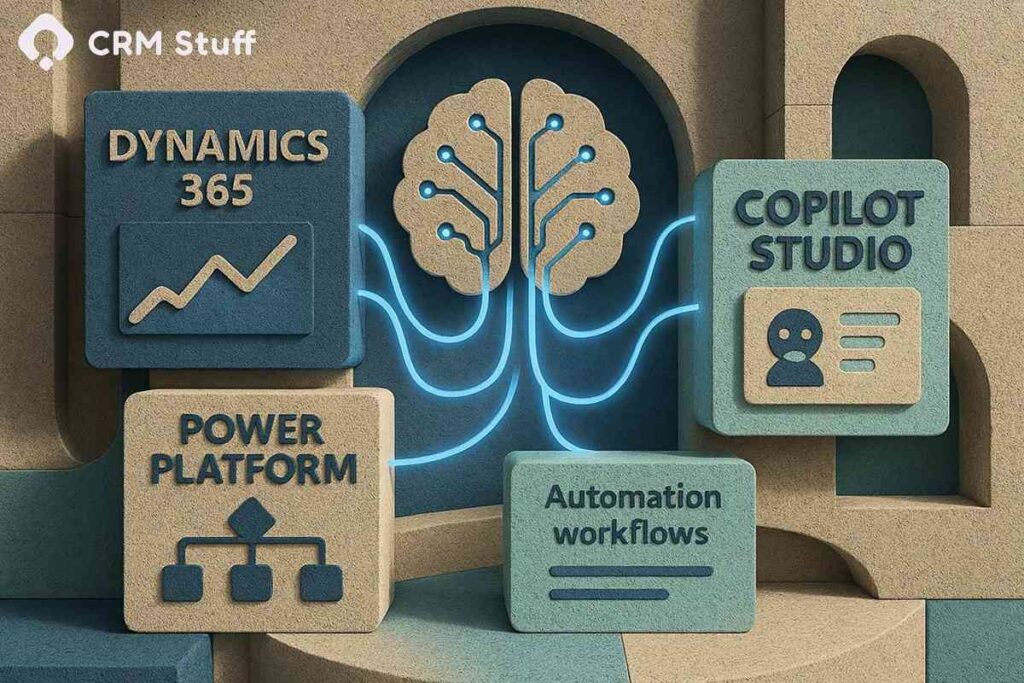
The real value of CRM lies not in storing data, but in connecting decisions to reality. Manufacturing leaders who treat CRM as a strategic platform not just a sales tool position their organizations for sustainable growth in an increasingly complex market. If you’re evaluating how well your CRM supports manufacturing operations, teams at CRM Stuff often start by assessing whether a Dynamics 365 setup truly connects sales data with production planning and forecasting.
FAQs
What is the best CRM for manufacturing companies?
The best CRM is one that supports ERP integration, complex pricing, and manufacturing workflows rather than generic sales tracking.
How does CRM integrate with ERP in manufacturing?
CRM shares customer, order, and demand data with ERP, enabling real-time visibility into inventory, production, and fulfillment.
Is CRM useful for small manufacturing businesses?
Yes. CRM helps small manufacturers improve forecasting, customer management, and process consistency as they scale.
How long does it take to implement a manufacturing CRM?
Most implementations take between three to six months, depending on integrations, customization, and training.
What features should manufacturing CRM software include?
Key features include ERP integration, pipeline forecasting, automation, role-based access, and analytics dashboards.