Hiring an MS Dynamics 365 developer often feels simple on the surface. You need someone who knows the platform, can customize your CRM, and keep things running. But for growing teams, that assumption is exactly where costly mistakes begin. Dynamics 365 is not just a technical tool. It sits at the center of sales, service, marketing, and operations. The person you hire will shape how your teams work every day.
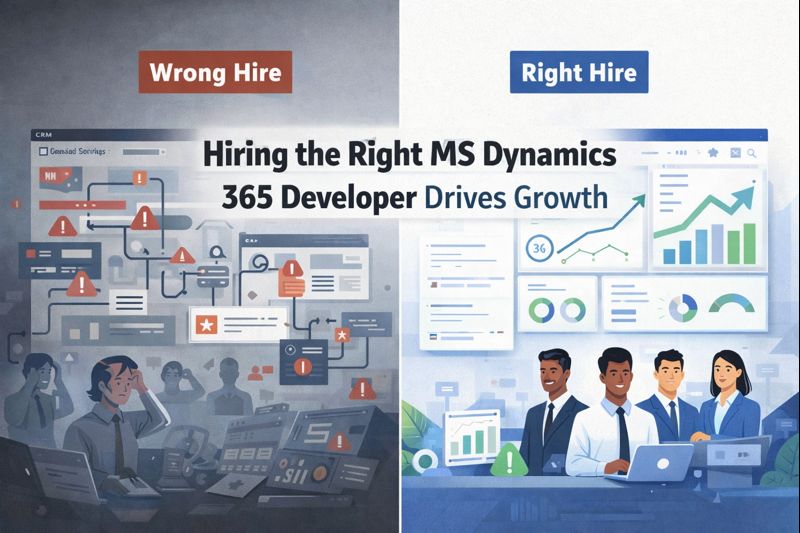
When the wrong developer is hired, growth stalls. Systems become rigid instead of scalable. Users stop trusting the CRM. Leadership loses visibility into real performance. These issues rarely show up on day one, but they compound as the business grows.
Hiring the right MS Dynamics 365 developer is not about filling a role. It is about enabling long-term growth. The right hire aligns technical decisions with business goals, builds for scale, and helps your CRM evolve as your company does. This guide breaks down how to hire with growth in mind, not just immediate delivery.
If you’re exploring what the right Dynamics 365 expertise looks like in practice, it helps to see how dedicated specialists work with real growth-stage teams. Platforms like CRM Stuff focus specifically on hiring dedicated MS Dynamics 365 developers who understand both the technical side and the business impact behind CRM decisions. Reviewing real-world service models can clarify what to expect before you make a long-term hiring commitment.
What Hiring an MS Dynamics 365 Developer Really Means
Hiring an MS Dynamics 365 developer is not the same as hiring a general CRM technician. At a growth stage, this role directly influences how efficiently your sales, service, and operations teams scale. A strong developer does more than write code. They translate business goals into CRM workflows that actually support daily work.
Many teams assume Dynamics 365 comes “ready to use.” In reality, its real value shows up only after customization. Entities, plugins, Power Automate flows, security roles, and integrations must be designed around how your business operates today and how it plans to operate tomorrow. This is where the developer’s judgment matters most.
A growth-focused MS Dynamics 365 developer understands trade-offs. They know when to customize and when to use native features. They build solutions that are flexible, maintainable, and easy for users to adopt as headcount and complexity increase.
At a high level, this role typically covers:
- Customizing Dynamics 365 modules to match business processes
- Building and maintaining plugins, workflows, and automations
- Integrating Dynamics 365 with Microsoft and third-party tools
- Supporting scalability, performance, and long-term system health
Why Hiring the Right Dynamics 365 Developer Is Hard
Finding an MS Dynamics 365 developer who can support growth is harder than most teams expect. The platform itself sits at the intersection of CRM strategy, Microsoft’s broader ecosystem, and custom development. Very few candidates are strong across all three.
One challenge is that Dynamics 365 roles are often mislabeled. Some developers are highly technical but lack business context. Others understand CRM processes well but rely heavily on out-of-the-box features and struggle with complex customization. On paper, both may look qualified, but the gap shows once real growth demands appear.
Another issue is that early hiring decisions are often rushed. Growing teams feel pressure to fix CRM issues quickly, so they hire based on availability or cost instead of long-term fit. That approach usually leads to brittle solutions that break as usage increases or new teams are added.
When this problem is ignored, the impact compounds over time. Teams work around the CRM instead of with it. Reporting becomes unreliable. Future developers spend more time fixing old decisions than building new capabilities. At that point, growth slows not because of strategy, but because the system cannot keep up.
Business Outcomes of Hiring the Right MS Dynamics 365 Developer
When you hire the right MS Dynamics 365 developer, the impact shows up quickly and compounds over time. Instead of reacting to CRM issues, your teams gain a system that actively supports growth. Processes feel intentional. Data becomes trustworthy. Leaders can make decisions with confidence because the CRM reflects reality.
A growth-oriented developer designs with scale in mind from the start. They anticipate increased data volume, more users, and evolving workflows. This prevents the need for constant rework as the business expands. Just as importantly, they build solutions that users actually adopt, which is often the difference between a CRM that exists and one that delivers value.
The most tangible outcomes typically include:
- Faster customization that aligns with changing business goals
- Cleaner, more reliable data for forecasting and reporting
- Seamless integration across Microsoft tools like Power Platform and Azure
- Higher adoption across sales, service, and operations teams
Over time, these outcomes reduce operational friction. Teams spend less time fighting the system and more time executing. That efficiency is what allows growth to feel manageable instead of chaotic.
Step-by-Step Guide to Hiring an MS Dynamics 365 Developer
The hiring process becomes much clearer when you approach it as a structured decision, not a reactive fix. Each step builds toward finding a developer who can support growth instead of creating future constraints.
Start by defining what growth means for your business. Are you adding new teams, entering new markets, or increasing transaction volume? These answers shape the CRM requirements long before technical skills come into play. Without this clarity, even experienced developers will build in the wrong direction.
Next, map those goals to Dynamics 365 capabilities. Identify which modules you rely on today and which ones you expect to use in the next 12 to 24 months. A developer who understands Sales, Customer Service, Power Platform, and integrations will be better equipped to design solutions that evolve over time.
As you move through interviews and evaluations, focus on real-world experience rather than theory. Ask candidates to explain how they handled similar growth challenges, what trade-offs they made, and what they would do differently today.
A practical hiring flow often looks like this:
- Clarify business goals and CRM outcomes
- Define required Dynamics 365 modules and tools
- Choose between in-house, freelance, or dedicated developers
- Evaluate hands-on customization and integration experience
- Assess communication and collaboration with non-technical teams
This approach reduces guesswork and increases the chances of hiring someone who can grow with your organization.
Common Mistakes When Hiring an MS Dynamics 365 Developer
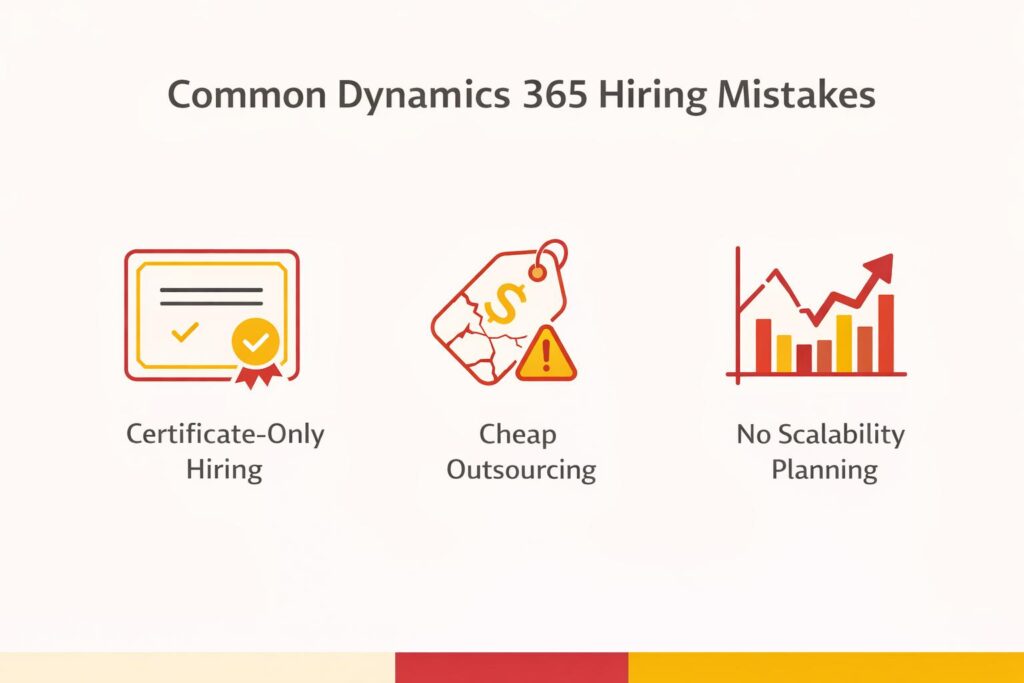
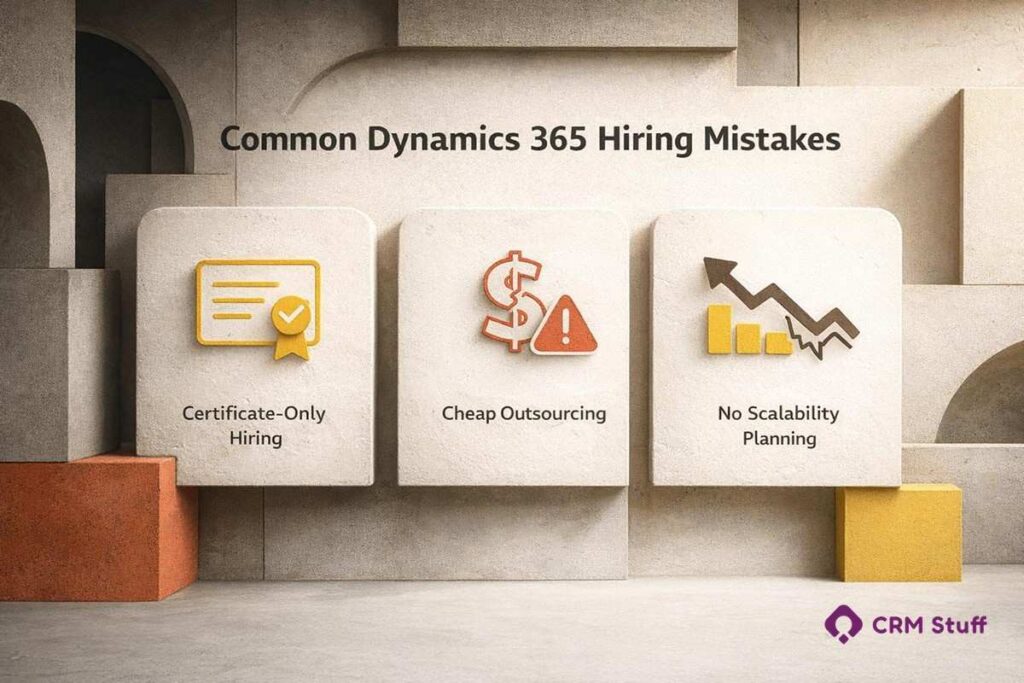
Most hiring mistakes happen when teams focus on surface-level signals instead of long-term impact. Certifications, years of experience, or familiarity with Dynamics 365 alone do not guarantee a good hire, especially for growing organizations.
One common mistake is hiring purely based on technical depth without assessing business understanding. A developer may write clean code but fail to grasp how sales teams work or how service metrics are measured. This leads to technically correct solutions that users resist or bypass entirely.
Another frequent issue is optimizing for short-term cost. Choosing the cheapest option often results in heavy customization with little thought for maintainability. Over time, this creates a fragile system that is expensive to extend and difficult for new developers to understand.
Teams also underestimate the importance of post-implementation support. Growth introduces new requirements, not fewer. Developers who disappear after delivery leave internal teams struggling to adapt the CRM as needs change.
Avoiding these mistakes requires looking beyond resumes and focusing on how a developer thinks, plans, and collaborates as the system evolves.
Best Practices for Hiring Dynamics 365 Developers for Growth
Once you understand the common pitfalls, a few best practices can significantly improve hiring outcomes. These are not about making the process longer, but about making it more intentional.
Start by anchoring interviews around real CRM scenarios. Instead of abstract questions, ask candidates how they would handle user adoption issues, data model changes, or performance concerns as usage grows. This reveals how they balance technical decisions with business realities.
It also helps to prioritize experience within the Microsoft ecosystem. Dynamics 365 rarely operates in isolation. Developers who understand Power Apps, Power Automate, Azure, and security models can design solutions that scale without constant rework.
Strong communication skills matter just as much as technical ability. Growth-stage teams change quickly, and a developer must be able to explain trade-offs, document decisions, and collaborate with stakeholders across departments.
In practice, effective hiring often includes:
- Scenario-based interviews using real business workflows
- Evaluation of Power Platform and integration experience
- Emphasis on documentation and long-term maintainability
- Clear expectations around ongoing optimization and support
These practices help ensure the developer you hire becomes a growth enabler, not a bottleneck.
For teams that want to move faster without compromising long-term scalability, working with specialists who focus exclusively on Dynamics 365 can reduce hiring risk. CRM Stuff offers access to dedicated MS Dynamics 365 developers who support customization, integrations, and ongoing optimization as your business grows. Exploring a dedicated developer model can be a practical next step when in-house hiring feels slow or uncertain.
FAQs
How much does it cost to hire an MS Dynamics 365 developer?
The cost varies based on experience, location, and engagement model. Dedicated developers typically cost less than full-time in-house hires while offering deeper platform expertise and flexibility as needs change.
What skills should an MS Dynamics 365 developer have?
A strong developer should understand Dynamics 365 modules, Power Platform, custom plugins, integrations, and CRM security, along with the ability to align technical work with business processes.
Should I hire in-house or use a dedicated Dynamics 365 developer?
In-house hires work well for long-term internal teams, while dedicated developers are often better for faster scaling, specialized expertise, and reduced hiring risk during growth phases.
How long does it take to onboard a Dynamics 365 developer?
Onboarding typically takes two to four weeks, depending on system complexity, documentation quality, and how clearly business workflows are defined.
Can a Dynamics 365 developer support long-term growth?
Yes. When hired correctly, a Dynamics 365 developer can design scalable solutions, support evolving requirements, and continuously optimize the CRM as the organization grows.