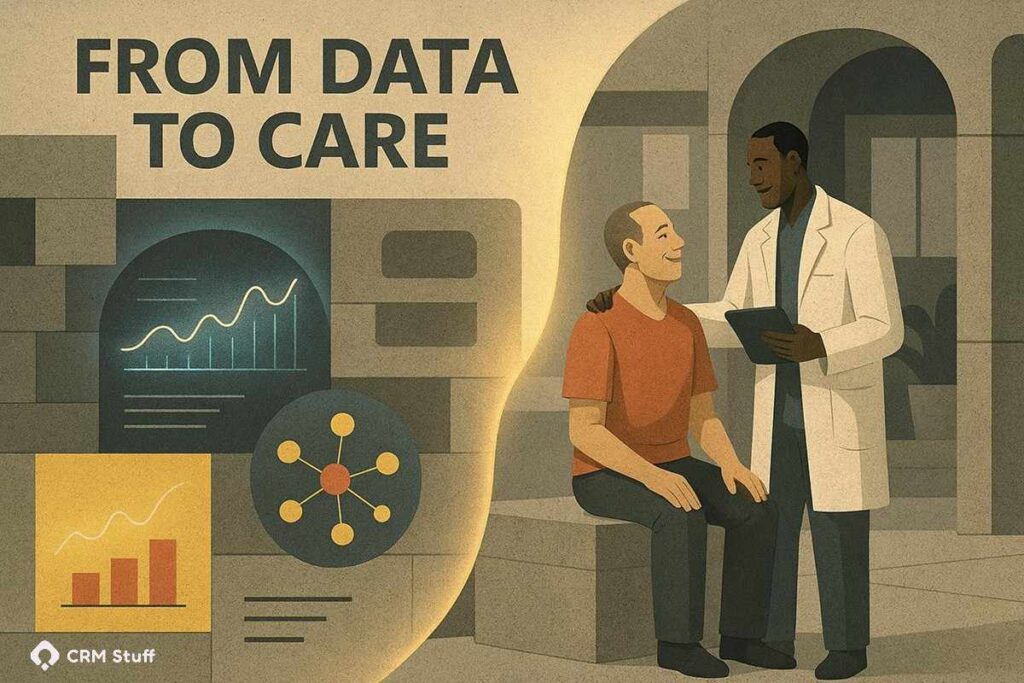
In healthcare, timing and trust matter as much as treatment. Yet many networks still rely on disconnected systems and manual follow-ups leaving patients disengaged and care teams overwhelmed. Every missed appointment, every untracked interaction, is a lost moment to strengthen relationships and improve outcomes.
That’s where Dynamics 365 CRM steps in not just as a database, but as an intelligent engagement layer that predicts patient needs before they arise. By using CRM segmentation, healthcare networks are discovering how to reach the right patients, at the right time, with the right message creating journeys that feel less like administration and more like care.
If your organization wants to turn scattered data into meaningful, predictive patient engagement, CRMStuff.com helps healthcare teams design and deploy Dynamics 365 CRM solutions that actually fit real-world workflows. From segmentation to AI-driven outreach, our experts make sure your CRM isn’t just collecting information it’s improving lives.
The Shift from Reactive Care to Predictive Engagement
For years, healthcare networks have operated reactively waiting for patients to call, show up, or drop off. The challenge isn’t commitment; it’s connection. Most organizations store critical insights in silos: the EHR holds clinical data, scheduling systems hold attendance data, and marketing tools hold communication history.
Predictive engagement flips that model. By segmenting patients dynamically based on treatment progress, appointment patterns, or health risk, a CRM like Dynamics 365 lets staff act before a problem arises. For example, if a physical therapy patient’s attendance rate drops, the system can automatically trigger reminders or offer virtual follow-ups increasing adherence without manual chasing.
It’s the difference between reacting to patients and truly understanding them.
Understanding CRM Segmentation in Dynamics 365 for Healthcare
In healthcare, segmentation isn’t about marketing lists it’s about knowing your patients better. With Dynamics 365 CRM, segmentation means grouping patients by real behaviors: appointment patterns, treatment types, or engagement levels.
Using Customer Insights, data from EHRs, scheduling tools, and billing systems is unified into one patient profile. This allows healthcare teams to build dynamic segments like “at-risk for drop-off” or “ready for cross-service follow-up” that update automatically as data changes.
When a patient misses two visits, the system can instantly move them into a re-engagement segment and trigger reminders or care calls. It’s data-driven care that feels human.
With segmentation, healthcare networks stop guessing who needs help and start acting on it.
Turning Data into Predictions – The Power of Dynamics 365 AI
Segmentation shows who your patients are. AI helps you see what’s next.
In Dynamics 365, predictive models analyze patient behavior, attendance, and care outcomes to flag risks early. For example, if a patient’s engagement score drops or they’ve canceled recent sessions, the CRM can predict a likely no-show and automatically prompt staff to reach out or offer a telehealth alternative.
This blend of AI + CRM segmentation means healthcare teams no longer wait for problems to surface. They act before patients disengage.
Across physical therapy networks and outpatient clinics, these predictive insights are helping reduce missed appointments and increase continuity of care two of the biggest revenue and satisfaction drivers in modern healthcare.
It’s not just automation; it’s anticipation. And that’s where the real transformation begins.
Personalizing the Patient Journey at Scale
Personalization in healthcare isn’t about sending more messages it’s about sending the right one, at the right time.
With Dynamics 365 CRM, personalization starts with segmentation and scales through automated patient journeys. Once a patient’s data is unified, the system can deliver care reminders, exercise plans, or follow-ups automatically but always with human context.
For example, a physical therapy patient completing rehab sessions might receive a tailored message about a mobility program or wellness class that matches their recovery stage. Another patient showing decreased engagement could get a call reminder or a motivational check-in.
This is what Dynamics 365 does best turning static communication into a living journey that adapts to real behavior.
At scale, this means healthcare networks can reach thousands of patients while keeping every message personal building trust, improving retention, and strengthening long-term care relationships.
Implementation Blueprint for Healthcare Networks
Adopting Dynamics 365 CRM in healthcare isn’t just a tech upgrade it’s a mindset shift. To see real results, networks need a structured rollout that blends data, workflows, and culture.
Step 1 – Unify your data. Connect EHRs, scheduling systems, billing, and communication tools inside Microsoft Dataverse. A single patient profile is the foundation for predictive care.
Step 2 – Define smart segments. Start with simple categories: high-risk patients, frequent no-shows, post-rehab candidates. Tie each segment to a measurable goal, like improving retention or reducing cancellations.
Step 3 – Layer in predictive insights. Use AI models in Dynamics 365 to flag risk scores or engagement drops then automate next steps with Customer Insights Journeys.
Step 4 – Ensure compliance and trust. Keep HIPAA and PHIPA controls active across all data workflows, and always audit access.
The Measurable Impact – Why It Matters
When healthcare networks combine segmentation with predictive intelligence, the results go beyond better workflows they create better outcomes.
Organizations using Dynamics 365 CRM have reported major improvements in patient retention and operational efficiency. Predictive outreach reduces no-shows by up to 30%, and segmentation-driven cross-sell campaigns increase secondary service bookings without extra marketing effort.
For staff, automation removes manual tracking and repetitive follow-ups. For patients, it means consistent, thoughtful communication a reminder that their care team knows them, not just their data.
In physical therapy and specialty care networks, these small shifts compound quickly. Fewer empty slots. More recurring sessions. Happier patients.
The impact is measurable but the meaning is deeper. When technology anticipates needs and personalizes care, healthcare moves closer to what it was always meant to be: personal, continuous, and human.
When implemented thoughtfully, CRM segmentation becomes less about technology and more about proactive, connected care.
Key Takeaways
- Segmentation isn’t marketing – it’s insight. Dynamics 365 CRM helps healthcare teams truly understand patient behavior and act with purpose.
- Predictive intelligence drives better care. By spotting early risk patterns, healthcare networks can reduce no-shows, improve adherence, and increase satisfaction.
- Personalization builds loyalty. Every relevant message or timely reminder strengthens trust and retention.
- Data unity equals smarter action. Connected systems mean fewer silos, faster response, and measurable results.
- Technology is only the enabler. The real transformation happens when healthcare teams use CRM tools to care more efficiently and more personally.
With the right strategy, Dynamics 365 CRM isn’t just software it’s the bridge between data and human connection in modern healthcare.
FAQs
1. What is CRM segmentation in healthcare?
CRM segmentation in healthcare means grouping patients based on shared behaviors, needs, or health status using tools like Dynamics 365. It helps teams deliver personalized, proactive care instead of generic communication.
2. How does Dynamics 365 CRM predict patient behavior?
Dynamics 365 uses AI and historical data to forecast trends like no-shows, treatment drop-offs, or engagement risks so staff can act before issues occur.
3. Can Dynamics 365 CRM integrate with EHR systems?
Yes. Through Microsoft Dataverse and healthcare connectors, Dynamics 365 can securely unify data from EHRs, billing systems, and scheduling platforms.
4. How does CRM personalization improve patient satisfaction?
When communication aligns with a patient’s journey reminders, progress messages, or targeted follow-ups it builds trust and reduces friction, leading to better outcomes and loyalty.
5. Is Dynamics 365 CRM compliant with healthcare privacy standards?
Absolutely. Dynamics 365 supports HIPAA, PHIPA, and regional compliance standards with built-in security, encryption, and audit tools.