
Ecommerce brands don’t usually fail because they lack traffic. They struggle because customers don’t come back. Rising ad costs, shrinking margins, and intense competition make one thing painfully clear: acquisition alone is no longer a growth strategy. What separates profitable ecommerce businesses from struggling ones is how well they manage relationships after the first purchase.
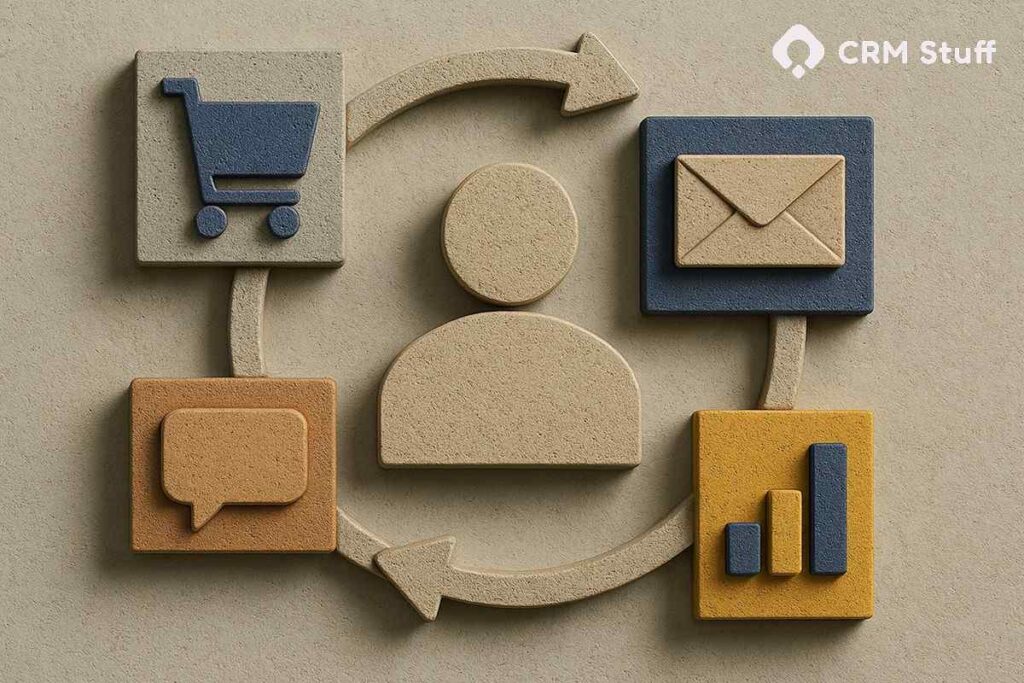
This is where a CRM for ecommerce becomes more than just software. When used correctly, it becomes the system that connects customer behavior, communication, support, and sales into a single, intelligent experience. Instead of guessing what customers want next, brands can respond with relevance, timing, and context.
Customer Lifetime Value is the metric that reflects this shift. It measures not just who buys, but who stays, who upgrades, and who advocates. In this guide, you’ll learn the nine CRM features that directly influence customer lifetime value, why they matter, and how ecommerce teams use them to build long-term, compounding growth rather than one-time wins.
A CRM for ecommerce helps businesses increase customer lifetime value by centralizing customer data, tracking behavior, and automating personalized engagement across the entire lifecycle. Features like unified customer profiles, segmentation, lifecycle automation, and predictive insights enable ecommerce brands to drive repeat purchases, improve retention, and build long-term customer relationships at scale. Ecommerce brands that prioritize retention often rely on solutions like CRMstuff to turn customer data into long-term growth.
What CRM for Ecommerce Means and How It Works
A CRM for ecommerce is a system designed to manage and activate customer relationships across the entire buying journey from the first site visit to repeat purchases and long-term loyalty. Unlike generic CRMs built mainly for sales teams, ecommerce-focused CRMs are tightly connected to storefront activity, marketing channels, and customer support interactions.
At its core, the CRM collects and organizes customer data in one place. This includes browsing behavior, purchase history, communication preferences, support tickets, and engagement across email, ads, and SMS. When all of this data lives in a single system, teams no longer operate in tools. Marketing, sales, and support can see the same customer story, in real time.
What makes ecommerce CRMs powerful is how they turn data into action. Instead of static records, customer profiles update automatically based on behavior. This allows brands to trigger personalized messages, recommend relevant products, and identify high-value or at-risk customers before revenue is lost. The result is smarter engagement that feels timely, relevant, and intentional rather than reactive.
Why Customer Lifetime Value Is the Most Important Ecommerce Metric
Customer Lifetime Value (CLV) measures the total revenue a business can expect from a customer over the entire relationship, not just a single transaction. In ecommerce, this metric matters more than surface-level numbers like traffic or one-time conversion rates because it reflects long-term profitability, not short-term wins.
As acquisition costs continue to rise across Google, Meta, and marketplaces, relying only on new customers becomes expensive and unstable. A brand that focuses on CLV can afford higher acquisition costs because it earns more from each customer over time. Repeat buyers also tend to purchase more frequently, spend more per order, and require less marketing effort compared to first-time customers.
This is where a CRM becomes essential. Without a system to track behavior, engagement, and value over time, CLV remains a theoretical metric. A well-implemented CRM turns CLV into something measurable and actionable. It shows which customers are worth investing in, which are at risk of churn, and which experiences actually drive long-term loyalty rather than one-off sales.
Key Ecommerce Challenges a CRM Is Designed to Solve
Most ecommerce businesses don’t struggle because they lack tools. They struggle because their tools don’t work together. Customer data is scattered across the store platform, email software, ad accounts, and support systems. When information lives in different places, teams are forced to make decisions with incomplete context.
One of the biggest challenges is generic customer engagement. Without a clear view of behavior and purchase history, brands end up sending the same messages to everyone. This leads to low engagement, higher unsubscribe rates, and missed opportunities to upsell or retain high-value customers. Personalization becomes a buzzword instead of a capability.
Another common issue is poor post-purchase experience. Many ecommerce journeys end after checkout, even though this is where loyalty is built. Without a CRM tracking repeat behavior and satisfaction signals, brands fail to identify churn risks early or reward customers who consistently return. A CRM addresses these challenges by centralizing data, enabling smarter segmentation, and supporting proactive engagement instead of reactive fixes.
The 9 CRM Features That Increase Customer Lifetime Value
Not every CRM feature impacts revenue equally. Some simply store data, while others actively shape how customers experience your brand over time. The features that truly increase customer lifetime value are the ones that help ecommerce teams understand intent, personalize engagement, and act at the right moment.
These features work together, not in isolation. When combined, they create a feedback loop where every interaction improves the next one. Customers feel understood, communication feels relevant, and relationships last longer. That is what drives repeat purchases and long-term value.
Below are the nine CRM features that consistently have the strongest influence on customer lifetime value when implemented correctly:
- Unified customer profiles that consolidate behavior, purchases, and interactions
- Behavioral and purchase tracking across channels
- Customer segmentation based on value, frequency, and intent
- Lifecycle marketing automation for timely engagement
- Personalized communication across email, SMS, and ads
- Upsell and cross-sell opportunity tracking
- Customer support history visibility for better experiences
- Analytics and reporting focused on retention and CLV
- AI-driven insights and predictions to anticipate customer needs
In the next sections, we’ll break down each feature in detail and explain how it directly contributes to higher customer lifetime value in real ecommerce scenarios.
Unified Customer Profiles Across Channels
A unified customer profile brings all customer data into one place purchases, browsing behavior, emails, ads, and support interactions. Instead of fragmented views across tools, every team sees the same, complete customer story.
This matters because customer lifetime value grows when experiences feel consistent and informed. When teams understand who the customer is and how they’ve interacted before, they can personalize communication, prioritize high-value buyers, and avoid irrelevant outreach. A unified profile is the base layer that makes every other CRM feature effective.
Behavioral and Purchase History Tracking
This feature allows the CRM to record what customers view, click, add to cart, and purchase over time. Instead of guessing intent, ecommerce teams can see clear behavioral patterns.
When brands understand what customers do, not just who they are, they can time offers better, recommend relevant products, and re-engage users before interest fades. This directly improves repeat purchases and reduces churn.
Customer Segmentation Based on Value and Intent
Segmentation groups customers based on factors like purchase frequency, order value, product interest, or engagement level. Not all customers contribute equally to revenue, and CRM segmentation makes this visible.
By focusing effort on high-value and high-intent segments, ecommerce teams stop wasting resources on generic campaigns. Personalized segments lead to higher engagement, better conversion rates, and stronger long-term customer value.
Lifecycle Marketing Automation
Lifecycle automation triggers messages based on where a customer is in their journey first purchase, repeat buyer, inactive user, or loyal customer. These automations run continuously without manual effort.
This ensures customers receive the right message at the right time, whether it’s onboarding, reactivation, or loyalty rewards. Consistent lifecycle engagement is one of the strongest drivers of customer lifetime value.
Personalized Communication Across Channels
Personalization goes beyond using a first name. CRM-powered personalization uses past behavior, preferences, and value data to tailor messages across email, SMS, and ads.
When communication feels relevant instead of promotional, customers are more likely to engage and trust the brand. Over time, this relevance builds stronger relationships and increases how long customers stay active.
Upsell and Cross-Sell Opportunity Management
CRMs help identify when customers are most likely to buy complementary or higher-value products. These opportunities are based on purchase history and behavior, not assumptions.
Strategic upselling increases average order value without increasing acquisition costs. When done thoughtfully, it enhances the customer experience while steadily increasing lifetime revenue.
Customer Support History Visibility
This feature gives support teams access to past purchases, issues, and conversations in one place. Customers don’t have to repeat themselves, and support responses become faster and more informed.
A smooth support experience has a major impact on retention. Customers who feel understood during problems are far more likely to return and continue buying.
Analytics and Reporting Focused on Retention
Ecommerce CRMs provide reports that track repeat purchases, churn risk, engagement trends, and customer lifetime value over time. These insights go beyond basic sales metrics.
By understanding why customers stay or leave, teams can improve retention strategies instead of relying on guesswork. Better decisions lead to more predictable and sustainable growth.
AI-Driven Insights and Predictive Analytics
Advanced CRMs use AI to predict churn, identify high-value customers early, and recommend next best actions. These insights help teams act proactively rather than reactively.
Predictive intelligence allows ecommerce brands to protect revenue before it’s lost and double down on relationships that are most likely to grow.
Beginner Guide: Getting Started With CRM for Ecommerce
Getting started with a CRM for ecommerce doesn’t require a complex setup or a large team. What matters most is starting with the right foundation and building gradually. Many ecommerce brands fail at CRM adoption because they try to do too much too soon, instead of focusing on the basics that actually impact customer lifetime value.
The first step is choosing a CRM that fits your business model and growth stage. A small D2C brand needs simplicity and automation, while a growing or multi-channel business needs deeper integrations and reporting. The goal is not to pick the most powerful tool, but the one your team will actually use consistently.
Once the CRM is selected, focus on connecting your core data sources ecommerce platform, email marketing tool, and customer support system. From there, define simple lifecycle stages such as first-time buyer, repeat customer, and inactive customer. Even this basic structure allows you to personalize communication, track retention, and start improving long-term value without overwhelming your team.
Step-by-Step Framework to Use CRM Features Effectively
To increase customer lifetime value, a CRM needs more than data collection. It needs a clear operating framework that connects customer behavior to business action. This step-by-step approach helps ecommerce teams turn CRM features into measurable outcomes without unnecessary complexity.
Start by mapping the customer journey from first interaction to repeat purchase. Identify key moments such as first order, second order, inactivity, and reactivation. These moments become the triggers for CRM workflows and personalization. When the journey is clear, automation becomes purposeful instead of random.
Next, define a small set of CLV-focused metrics to track inside the CRM. This could include repeat purchase rate, time between orders, and churn risk indicators. Use these insights to refine segmentation and messaging over time. As data quality improves, the CRM becomes smarter, helping teams engage customers with better timing, relevance, and consistency.
Real Ecommerce Use Cases and Practical Scenarios
CRM features become truly valuable when applied to real customer situations. In ecommerce, small improvements in timing, relevance, and follow-up can significantly increase customer lifetime value when applied consistently.
One common use case is post-purchase engagement. After a customer places an order, the CRM can trigger educational content, usage tips, or complementary product recommendations based on what was purchased. This keeps the brand top of mind and increases the likelihood of a second purchase without relying on discounts.
Another scenario is churn prevention. By monitoring inactivity or declining engagement, the CRM can flag at-risk customers early. Ecommerce teams can then respond with personalized incentives, reminders, or support outreach before the customer fully disengages. These proactive actions often recover revenue that would otherwise be lost.
CRMs are also effective for identifying loyal customers. High-frequency or high-value buyers can be rewarded with early access, exclusive offers, or loyalty programs. Recognizing and nurturing these relationships strengthens trust and extends the customer lifecycle naturally.
Industry-Specific CRM Use Cases for Ecommerce Brands
Different ecommerce models use CRM features in different ways, but the goal remains the same: increase customer lifetime value through better relationships and smarter engagement. Understanding how CRM adapts to each model helps teams apply features more effectively.
For direct-to-consumer (D2C) brands, CRM data is often used to personalize repeat purchase journeys. Purchase frequency, product preferences, and engagement history help trigger replenishment reminders, loyalty rewards, and early access to new launches. This keeps customers engaged beyond the first transaction.
In subscription-based ecommerce, CRM systems play a key role in reducing churn. Tracking usage behavior, skipped orders, and support interactions allows brands to intervene before cancellations happen. Timely communication and personalized offers help extend subscription lifetimes.
For B2B and wholesale ecommerce, CRM features support longer buying cycles and relationship-driven sales. Account-level insights, purchase history, and communication tracking help teams maintain consistent engagement, manage renewals, and increase contract value over time.
Common Mistakes
Many ecommerce businesses invest in a CRM but fail to see meaningful improvements in customer lifetime value. The issue is rarely the tool itself. It’s how the CRM is implemented, adopted, and aligned with business goals.
One common mistake is treating the CRM as nothing more than a contact database. When teams only store customer information without using it to drive personalized actions, the CRM becomes passive and underutilized. Another frequent issue is over-automation. Sending too many generic or poorly timed messages can damage trust and push customers away instead of building loyalty.
Data quality is another overlooked problem. Incomplete profiles, outdated information, or inconsistent tracking lead to inaccurate insights and poor decision-making. Finally, many teams fail to tie CRM activity back to customer lifetime value. Without measuring retention, repeat purchases, and churn, it’s impossible to know whether CRM efforts are actually working.
Conclusion
Customer lifetime value is built through consistent, relevant, and well-timed experiences not one-time campaigns. A CRM for ecommerce provides the structure needed to understand customers deeply and engage them intelligently across their entire journey. When features like unified profiles, behavioral tracking, segmentation, and automation work together, relationships become stronger and more predictable.
The real impact of a CRM comes from how it is used. Brands that focus on long-term value instead of short-term transactions are better positioned to grow sustainably, even as acquisition costs rise. By aligning CRM capabilities with customer behavior and retention goals, CRM for ecommerce businesses can turn everyday interactions into lasting customer relationships.
FAQs
What is the best CRM for ecommerce businesses?
The best CRM depends on your business size, sales model, and integrations. Ecommerce-focused CRMs that support behavioral tracking, automation, and storefront integration deliver the most value.
How does a CRM increase customer lifetime value?
A CRM increases lifetime value by enabling personalized engagement, improving retention, identifying upsell opportunities, and reducing churn through proactive communication.
Can small ecommerce stores benefit from a CRM?
Yes. Even small stores benefit from basic CRM features like customer segmentation, post-purchase automation, and engagement tracking to drive repeat sales.
How long does it take to see results from an ecommerce CRM?
Most businesses start seeing retention and engagement improvements within 60 to 90 days when CRM features are actively used.
What data should an ecommerce CRM track first?
Start with purchase history, customer contact details, engagement data, and support interactions. These provide the foundation for personalization and retention strategies.

